
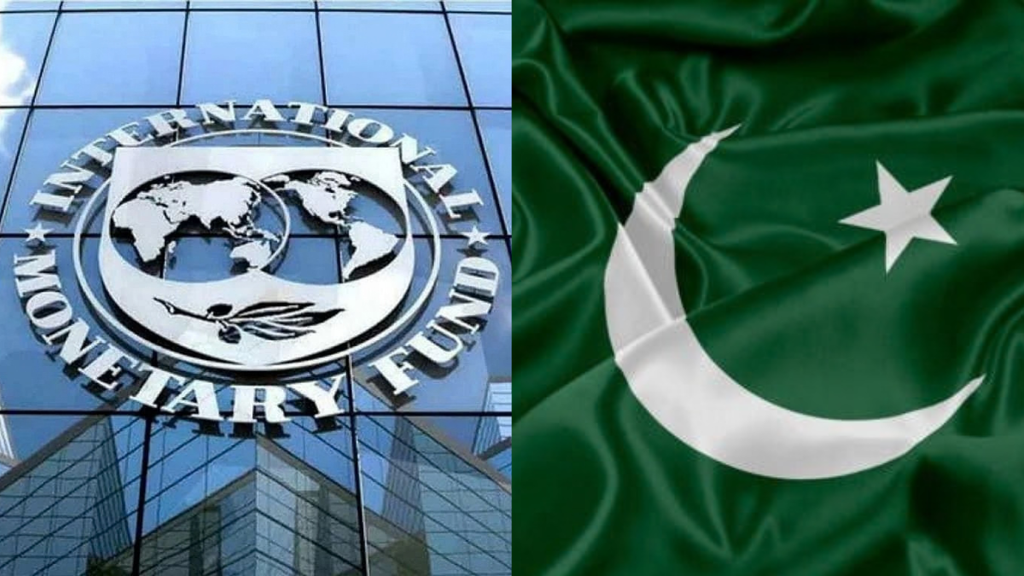
Pakistan Reaches Key IMF Deal: What the $1.2 Billion Agreement Means for the Economy
Pakistan and the International Monetary Fund (IMF) have reached a staff-level agreement on the latest reviews of the country’s ongoing IMF programmes, potentially paving the way for around $1.2 billion in additional financing.
The agreement covers the fourth review of Pakistan’s $7 billion Extended Fund Facility (EFF) and the third review of the Resilience and Sustainability Facility (RSF). The IMF also completed its 2026 Article IV consultation with Pakistan.
However, the agreement is not yet final. It still requires approval from the IMF’s Executive Board before the funds can be released.
How Much Money Could Pakistan Receive?
If approved by the IMF Executive Board, Pakistan is expected to receive approximately:
- $1.0 billion under the Extended Fund Facility (EFF)
- $210 million under the Resilience and Sustainability Facility (RSF)
This would bring total disbursements under the two IMF programmes to around $5.7 billion.
The IMF team, led by Mission Chief Iva Petrova, held discussions with Pakistani authorities in Islamabad and Karachi between September 23 and October 7, 2026.
IMF Says Pakistan Has Maintained Economic Stability
According to the IMF, Pakistan has managed to maintain overall macroeconomic stability despite external challenges, including the impact of the conflict in the Middle East.
Pakistan’s real GDP growth reached around 4% during the first three quarters of FY2026, while full-year growth is estimated at 3.6%.
However, the IMF noted that higher energy prices and supply disruptions have slowed economic momentum.
Inflation also remains an important issue. After reaching a peak in May, headline inflation eased to around 10.3% in September, while core inflation remained relatively contained.
Pakistan’s external position also improved during the year. The current account remained broadly balanced, supported by strong worker remittances, while foreign exchange reserves increased to around $21.5 billion by the end of September.
The IMF also noted that improved sovereign credit ratings and renewed access to international financial markets have strengthened confidence in Pakistan’s economic policies.
What Does the IMF Want Pakistan to Do Next?
The IMF agreement comes with continued emphasis on economic reforms. Some of the major priorities highlighted by the Fund include the following.
1. Keep Government Finances Under Control
The IMF wants Pakistan to maintain strong fiscal discipline and properly implement the FY2027 budget.
The government is targeting an underlying primary surplus of 2% of GDP.
The IMF also called for improvements in tax collection, including greater use of digital invoicing, risk-based audits and third-party data.
In the longer term, Pakistan is expected to work toward a tax system that is simpler, fairer and more supportive of economic growth.
2. Improve Public Financial Management
The IMF wants Pakistan to improve how government finances, public investment and procurement are managed.
The authorities are also expected to reduce risks associated with government debt refinancing and borrowing costs while continuing to develop the domestic government securities market.
3. Increase Spending on Health and Education
The IMF highlighted the need to protect social spending.
Spending on health and education increased from 2.2% of GDP in FY2024 to 2.5% in FY2026.
The government has committed to increasing this further to 2.8% of GDP in FY2027.
The IMF also supported improvements in targeted cash-transfer programmes for vulnerable households.
However, it recommended that the government’s fuel support scheme be phased out because of its high cost and broad coverage.
4. Keep Monetary Policy Focused on Inflation
The State Bank of Pakistan (SBP) is expected to maintain an appropriate monetary policy stance to ensure inflation moves sustainably toward its target range.
The IMF also stressed the importance of maintaining exchange-rate flexibility.
According to the Fund, continued accumulation of foreign exchange reserves and gradual improvements in the foreign exchange system can help Pakistan better absorb future economic shocks.
5. Fix the Energy Sector
Pakistan’s energy sector remains one of the country’s major economic challenges.
The IMF said timely electricity and gas tariff adjustments, along with structural reforms, are important to prevent the return of large-scale circular debt.
The Fund also highlighted reforms involving electricity distribution companies, private-sector participation, competition in the power market and reducing losses in the gas sector.
IMF Also Wants Broader Economic Reforms
The 2026 Article IV consultation went beyond the immediate IMF programme.
The IMF said Pakistan needs structural reforms to move toward higher-value economic activities and improve productivity.
Areas highlighted by the Fund include:
- Increasing competition in the economy
- Reducing unnecessary regulatory and trade barriers
- Advancing privatisation
- Improving governance of state-owned enterprises
- Strengthening transparency
- Improving anti-corruption institutions
- Simplifying the tax system
- Increasing investment in human development
- Improving the efficiency of the energy sector
- Deepening financial markets
The objective is to improve productivity, create more jobs, encourage private investment and increase exports.
Climate and Energy Resilience Also Part of the Programme
Under the Resilience and Sustainability Facility, Pakistan is also working on reforms related to climate change.
The IMF noted progress in incorporating climate considerations into public investment planning and improving disaster-risk financing.
Further reforms include better management of irrigation water, improved targeting of electricity subsidies, energy-efficiency standards and efforts to reduce emissions from the transport sector.
What Happens Next?
The latest agreement is an important step, but Pakistan has not yet received the funds.
The IMF Executive Board must approve the staff-level agreement before the next disbursements can be made.
Pakistan’s Finance Ministry and the IMF held a wrap-up session following the conclusion of the review. Finance Minister Muhammad Aurangzeb, Finance Secretary Imdad Ullah Bosal and IMF Resident Representative Mahir Binici were among the officials present.
Why This Matters
The latest IMF agreement provides Pakistan with additional external financing while also keeping pressure on the government to continue economic reforms.
For ordinary Pakistanis and businesses, the key areas to watch will be inflation, interest rates, energy prices, taxes, the exchange rate and economic growth.
The bigger challenge for Pakistan, however, will be turning short-term economic stability into sustainable growth without repeatedly returning to balance-of-payments crises.
Source: International Monetary Fund (IMF); based on the IMF’s statement following the 2026 Article IV consultation and programme reviews.